

If you have ever finished a full day of back-to-back meetings feeling mentally hollowed out and physically rigid, the problem may be simpler than you think. You were sitting still for too long. And one increasingly popular solution, the walking pad, is backed by more robust science than its minimalist design might suggest.
Walking pads, the compact under-desk treadmills designed for light ambulatory use during work hours, have moved from a niche ergonomic curiosity into mainstream office culture. But beyond the aesthetic appeal of a cleaner desk setup, the physiological and cognitive case for using a walking pad at work is genuinely compelling. Here is what the research actually shows.
Why Sitting Meetings Drain the Body and Brain
Most desk-based professionals are aware, in a vague and uncomfortable way, that they sit too much. The actual scale is more alarming. Workers in management, HR, project coordination, or fully remote roles can easily accumulate nine to twelve hours of sedentary time per day when work, commuting, and evening screen habits are combined.
Large-scale epidemiological studies have established a clear pattern: sitting for more than eight to ten hours daily is independently associated with elevated risks of cardiovascular disease, type 2 diabetes, certain cancers, and premature mortality, even among people who exercise regularly. Weekly gym sessions, it turns out, cannot fully counteract the metabolic damage of prolonged uninterrupted sitting. The two are largely separate physiological problems, which is precisely why a walking pad positioned under your desk is a different kind of intervention to a lunchtime run.

From a physiological standpoint, extended sitting deactivates a large proportion of skeletal musculature, decelerates circulatory velocity, and substantially reduces the efficiency of glucose and lipid metabolism. Within just a few hours of uninterrupted sedentarism, insulin sensitivity begins to decline. Over time, this cardiometabolic suppression contributes to weight gain, vascular stiffening, and a gradual erosion of energy and vitality.
The cognitive consequences are equally significant. Neuroimaging research has linked high daily sitting time to structural thinning in the medial temporal lobe, a region centrally involved in memory and learning. In the short term, this manifests as reduced attention during long meetings, sluggish information processing, and the creeping mental fatigue that makes the fourth call of the day feel almost impenetrable. This is the precise opposite of what productive meetings are designed to deliver.
How a Walking Pad Changes Your Meeting Physiology
This is where the walking pad becomes relevant not just as a wellness accessory but as a functional tool for cognitive and metabolic health.
Replacing static sitting with light ambulatory movement, even at the gentle, conversational pace typical of walking pad use, shifts the body into a meaningfully more active metabolic state. Large muscle groups re-engage. Blood flow accelerates. The metabolic pathways that prolonged sitting suppresses begin to function as they were designed to.
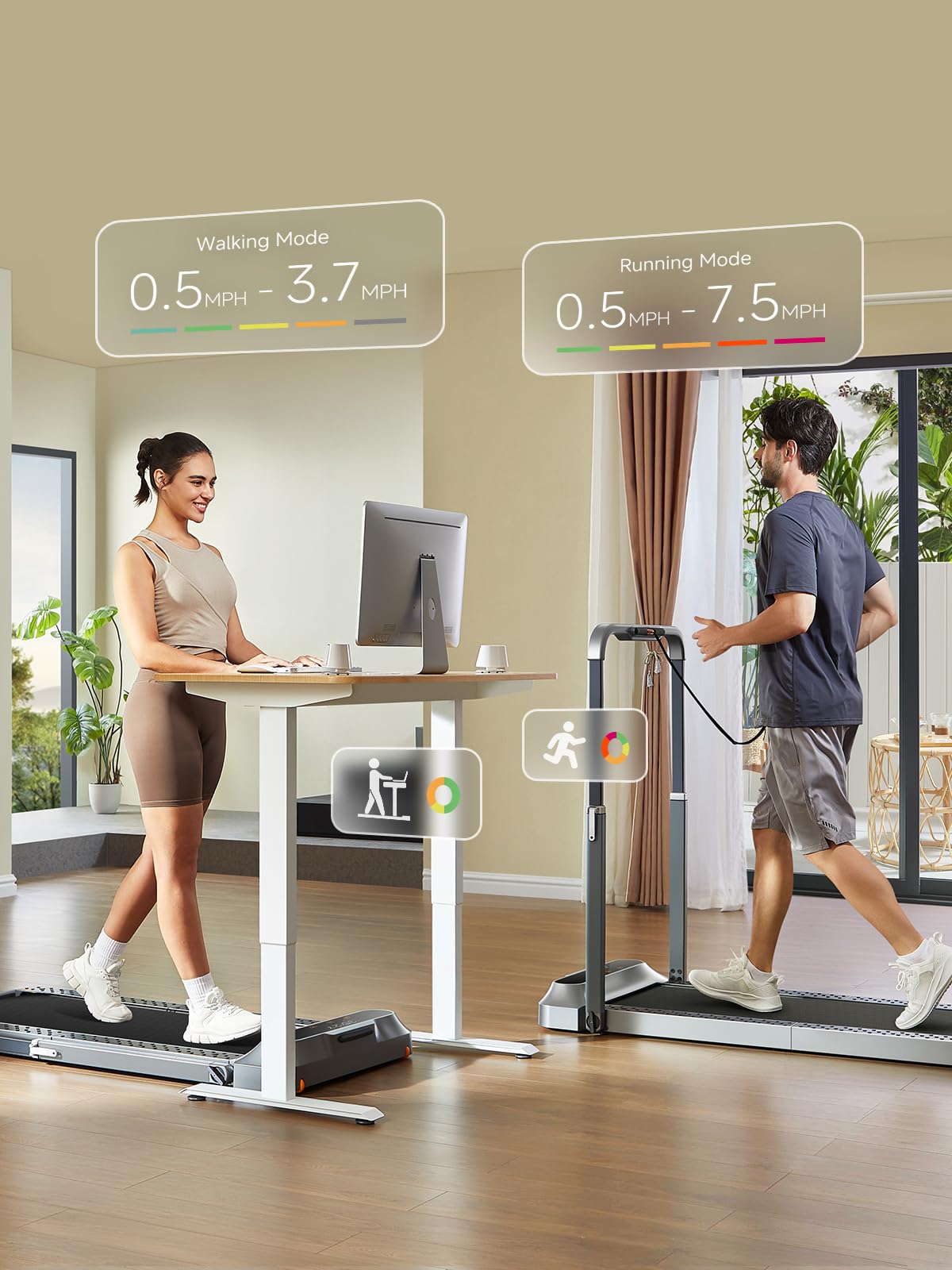
Research shows that short walking breaks distributed throughout the working day can reduce postprandial blood glucose levels, improve endothelial responsiveness, and lower inflammatory markers associated with cardiovascular risk. In one well-designed controlled study, interrupting seated work with just two minutes of walking every twenty minutes significantly reduced overall glycaemic exposure across the day compared with continuous sitting. A walking pad makes this kind of regular, low-intensity interruption of sedentary time effortless. No need to leave your desk, step outside, or disrupt a call.
Workplace interventions built around sitting less and moving more have also demonstrated improvements in self-reported stress, energy levels, and work engagement. For organisations, this means that meaningful movement cannot be entirely outsourced to gym memberships or after-work exercise. It needs to be embedded directly into the working day, and an under-desk walking pad is one of the most practical mechanisms for achieving exactly that.
Walking and creativity: why ideas flow better on the move
Beyond cardiometabolic function, walking exerts a measurable and well-documented influence on the quality of thinking. This is not anecdotal. It has been tested under controlled conditions with remarkably consistent results.
In a widely cited series of experiments conducted at Stanford University, participants completed divergent thinking assessments, a standard proxy for creative output, while either sitting or walking. Walking participants, whether on a treadmill facing a blank wall or moving through outdoor environments, produced creative output that was approximately 60% higher on average than their seated counterparts. Even more striking: the cognitive elevation persisted after participants sat back down.
A walking pad positioned under a standing desk replicates this effect in a workplace context. At the low speeds typical of desk-based use, generally between one and three kilometres per hour, the cognitive load of walking itself is negligible while the neurological benefits accumulate. Movement stimulates cerebral perfusion, activates dopaminergic and noradrenergic neurotransmitter systems, and loosens the kind of ruminative cognitive narrowing that static environments tend to reinforce. The result is broader associative thinking, more fluid idea generation, and greater intellectual flexibility.
This makes walking pad use particularly well-suited to:
- Brainstorming and ideation sessions
- Strategic planning discussions
- One-to-one coaching conversations
- Creative writing, drafting, or content work
- Audio-only meetings and calls
For tasks requiring intense screen focus, such as detailed data analysis, technical review, or complex document editing, many professionals adopt a hybrid approach: use the walking pad during exploratory or conversational phases, then transition to a static seated posture to finalise outputs. The seated portion often feels noticeably sharper as a result.
Does Using a Walking Pad Hurt Productivity?
The most common concern is intuitive but largely unsupported by evidence: that movement will divide attention, reduce accuracy, and cost more in errors than it gains in energy. Research examining active workstations, treadmill desks, and walking pad equivalents has consistently failed to validate this objection.
Studies show minimal impact on typing accuracy and standard cognitive task performance at the light ambulatory speeds characteristic of walking pad use. Long-term productivity metrics show no meaningful deterioration. What researchers consistently observe is improved energy, higher subjective engagement, and greater conversational focus, particularly when screens and notifications are set aside during calls.
The cognitive load argument also tends to overestimate the complexity of typical work tasks. Listening, speaking, thinking, and drafting, the activities that constitute the majority of knowledge work, are not meaningfully impaired by walking at one to two kilometres per hour. The dual cognitive demand sits well within comfortable capacity, while the physiological benefits of movement accumulate quietly in the background.
Many professionals who integrate a walking pad into their daily routine report that their most productive hours shift: the mid-afternoon energy trough that previously marked the end of effective thinking becomes, with regular low-level movement, substantially less pronounced.
How to Use a Walking Pad for Meetings and Deep Work
For anyone considering incorporating a walking pad into their working day, the practical implementation is more straightforward than it might initially seem.
Start with the right tasks. Walking pads work best during calls, one-to-one meetings, audio content consumption, brainstorming, drafting, and light administrative work. Meetings heavily dependent on shared screens or detailed documentation may still benefit from a hybrid format. Begin moving during discussion, then pause the walking pad for screen-intensive phases.
Introduce it gradually. Begin with twenty to thirty minute sessions and build duration incrementally. Your musculature, particularly in the lower legs and core, will adapt within a week or two. Starting at a conservative speed, typically one to two kilometres per hour, ensures movement feels effortless and unobtrusive rather than distracting.
Pair it with a structured approach to meetings. Movement does not mean abandoning rigour. Whether you are on a walking pad during a one-to-one or walking an outdoor route between meetings, effective structure remains essential: a clear goal or agenda, a designated note-taker for action items, and an agreement to keep devices purposeful rather than distracting.
Consider accessibility and inclusivity. For teams looking to encourage walking pad use or movement-based meeting culture more broadly, flexibility is essential. Walking pads should complement rather than replace existing working arrangements, and colleagues with varying physical needs should always have fully equivalent alternatives available.
Position it within a broader movement strategy. A walking pad is most effective as part of a coherent ergonomic environment, one that might also include a sit-stand desk, intentional movement breaks between calls, and a cultural normalisation of mobility during working hours. The cumulative effect of these choices, individually modest, is meaningfully significant.
Choosing the Right Walking Pad for Office Use
Not all walking pads are created equal, and the differences matter for sustained daily use.
Noise level is often the primary practical consideration in shared or home office environments. Look for models specifying low-decibel motor operation, typically under 45 to 50 dB, to avoid disrupting calls or colleagues.
Speed range for desk-based use should comfortably cover one to four kilometres per hour. Higher speeds are largely irrelevant for cognitive work and may actually increase the cognitive load of walking to a counterproductive level.
Deck length affects natural stride comfort. Shorter decks are more compact and portable; longer decks accommodate a more natural gait. For most desk-based users, a deck length of around 100 to 120 centimetres strikes a reasonable balance.
Weight capacity and surface quality affect longevity and joint comfort during extended use. A cushioned belt reduces impact on knees and lower back during multi-hour sessions, an important consideration for those planning to use the pad for several hours daily.
Portability and storage vary significantly between models. Foldable walking pads with built-in transport wheels are well-suited to hybrid workers or those with limited office space.
Three Ways to Start Using a Walking Pad This Month
For professionals or organisations wanting to begin building movement into the working day, three practical starting points tend to produce the most durable change.
Convert one daily call into a walking pad session. A recurring one-to-one, a morning catch-up, or a regular strategy call are natural candidates. Run the format for a month, assess your energy and focus honestly, and iterate from there.
Use the walking pad during passive listening. Webinars, recorded training content, long asynchronous audio updates; these are ideal walking pad tasks. The cognitive demand is low and the sedentary accumulation you avoid is real.
Raise awareness around sitting time within your team. Sharing the research on sedentary behaviour and cognitive performance can shift the cultural permissibility of movement during work in ways that policy mandates rarely achieve. When people understand why sitting for six hours impairs their thinking, the motivation to use a walking pad or take movement breaks tends to follow naturally.
The Bigger Picture
Modern work has become structurally sedentary in ways that are genuinely novel in human history. The digital consolidation of professional activity into screens has entrenched a working posture, seated, static, forward-facing, that is fundamentally at odds with the biomechanical and neurological requirements of sustained cognitive performance.
A walking pad will not resolve this entirely. But it represents something more meaningful than a workplace wellness trend. It is a low-friction, evidence-backed intervention that embeds movement into the working day without requiring any reduction in output. It reduces sedentary time, supports metabolic and cardiovascular health, improves energy, sharpens creative thinking, and tends to make conversations more generative and less mentally costly.
The most productive hours of the working day do not have to happen sitting still. The research is clear on this. The walking pad simply makes it practical.